Software engineer / New YorkIndependent projects & selected work
Frank Cancedda.
I like making things that help other people build.
At Technergetics, that means developer tools, Kubernetes platforms, and AI systems that run without an internet connection. Outside work, it means a Rust game engine and a small rack beside my desk.
Open to Senior & Staff engineering roles · Remote-first
Things I work on
At Technergetics · 2022–present
01 / Developer experience
A working environment. In a few hours.
Getting a new engineer's environment running used to take more than a day. I built a Tilt + k3d project that brings up the AI stack with one command. Dozens of engineers used it.
Forty-plus services and jobs, with the dependencies together on your laptop: inference, identity, storage, and the applications that use them.
40+ services & jobs. One local stack. Simplified view of the development environment.02 / AI infrastructure
When the network stops at the door.
I packaged vLLM for offline installation, took Triton through Iron Bank, and designed and implemented substantial parts of a RAG system. The inference platform serves concurrent users in disconnected production environments.
Python / PGVector / OpenSearch / Triton / vLLM
03 / Technical leadership
Build it. Help the team build it.
I own the platform roadmap and architecture, and led a three-person team through 2024. I still write code. I want teammates to understand what we're building, have a say in how we build it, and be proud of the result.
Software Engineer III · Platform tech lead
Still curious after work.
Research & personal projects
Machine learning
Learning how to search
A small policy network that chooses a retrieval strategy for each query under a token budget. Built on my from-scratch PyTorch transformer lab and evaluated across four BEIR benchmarks.
PyTorch / REINFORCE / BEIR
Reasoning
Finding a way through
I reimplemented recursive reasoning models and applied them to multi-agent pathfinding, with per-agent metrics, heatmaps, and interactive visualizations to see what the models actually learned.
A Rust game engine with the browser as a first-class target. An excuse to spend time on systems design, WASM, and APIs that are pleasant to build with.
Rust / WASM / ECS
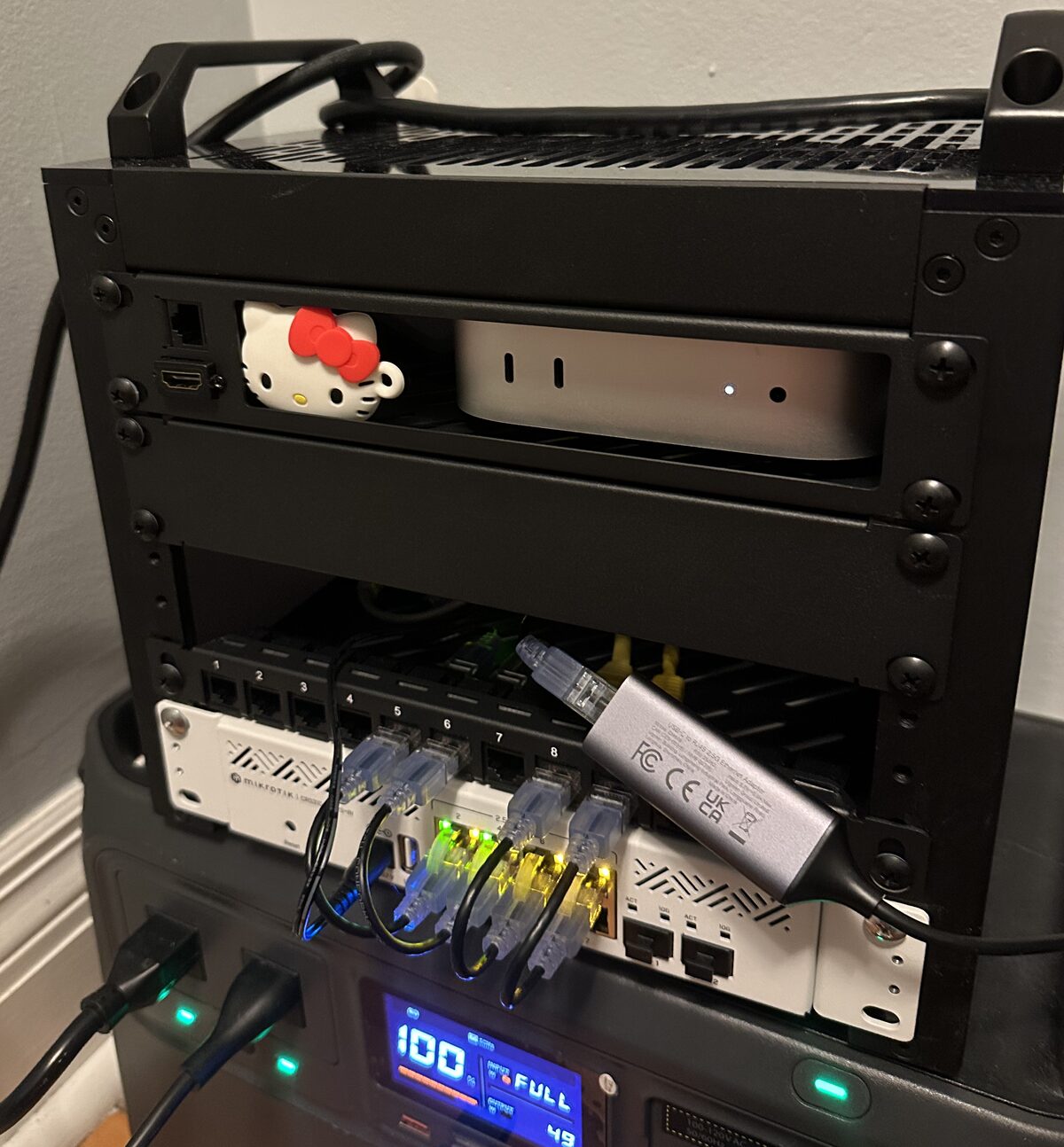
Fig. 02 — The cluster beside my desk.
A small, ongoing project
Yes, the whole thing fits beside my desk.
I run a Kubernetes cluster in this 10-inch rack. It hosts my GitLab and live apps, including a fitness tracker with AI meal analysis.
Flux handles deployments, Authelia handles sign-in, and Grafana tells me when something needs attention. It gives me a place to try things and live with the maintenance afterward.
Hardware
Mac mini + MikroTik
Power
Battery-backed · about 50 W
Next chapter
I'm looking for my next team.
I'm looking for my next engineering role, working on developer platforms or AI infrastructure. Tell me what you're building, or ask me about something here.